Estimated Tax Payments: A Simple Guide for Business Owners and High Income Taxpayers
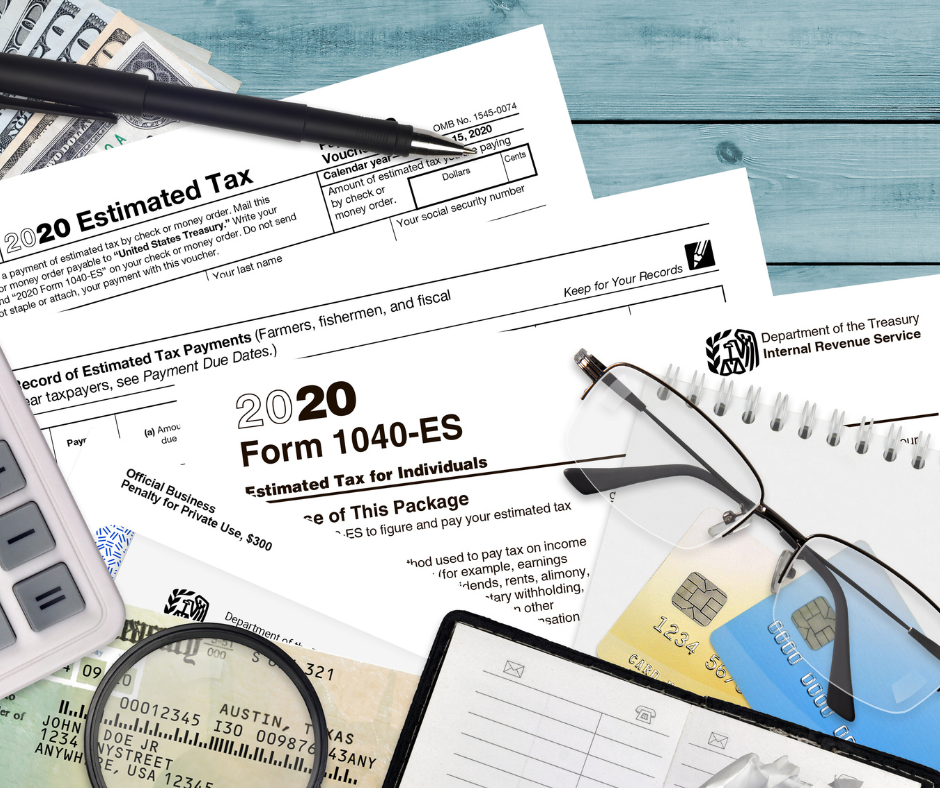
September 15th is the annual Q3 estimated tax payment deadline, which makes this a great time to talk about one of the most misunderstood areas of taxes: estimated tax payments.
Most taxpayers are under the assumption that quarterly estimated tax payments are only for business owners and investors, but that is not necessarily true.
The U.S. tax system is considered a pay as you go system, meaning the IRS generally expects you to pay taxes throughout the year as you earn your income instead of waiting until you file your tax return.
For employees, this normally happens automatically through federal income tax withholding from each paycheck. For business owners, investors and other taxpayers with income that does not have enough taxes withheld, estimated tax payments may be necessary.
Who Needs to Make Estimated Tax Payments?
Generally, you may need to make estimated tax payments if:
- You expect to owe at least $1,000 in federal taxes after subtracting your federal withholding and refundable tax credits, and
- Your withholding and refundable credits are expected to be less than the smaller of:
90% of your current year tax liability, or
100% of your prior year tax liability, generally increased to 110% if your prior year adjusted gross income was more than $150,000, or $75,000 if married filing separately.
This is why estimated tax payments are not just a business owner issue.
For example, let's say you are a doctor earning $500,000 per year. Your employer withholds $125,000 of federal taxes throughout the year, but after factoring in your total income, investments and other tax items, your final federal tax liability comes out to $153,000.
Even though you already paid $125,000 to the IRS, you could potentially face an estimated tax underpayment penalty depending on your prior year tax liability and whether you satisfied one of the IRS safe harbor rules.
The same issue can happen if you receive a large bonus, sell stocks for a major capital gain, receive rental income, take retirement distributions or earn significant income from a side business.
The Estimated Tax Safe Harbor Rules
The IRS provides safe harbor rules that can help you avoid an underpayment penalty even if you still owe money when you file your tax return.
For most taxpayers, you generally want your estimated payments and withholding during the year to cover at least the smaller of:
90% of your current year tax liability
or
100% of your prior year tax liability
For higher income taxpayers, the prior year safe harbor increases from 100% to 110% when your prior year AGI exceeds $150,000, or $75,000 if married filing separately.
Here is a simple example.
If your 2025 total tax was $40,000 and your 2025 AGI was under $150,000, paying at least $40,000 toward your 2026 federal taxes through qualifying withholding and timely estimated payments may allow you to satisfy the prior year safe harbor.
If your 2025 AGI was over $150,000, that prior year safe harbor would generally increase to $44,000, which is 110% of the $40,000 prior year tax.
Important: Avoiding an estimated tax penalty does not mean you will not owe taxes when you file. The safe harbor rules are designed to help determine whether you have paid enough throughout the year to avoid an underpayment penalty.
When Are Estimated Tax Payments Due?
For calendar year individual taxpayers, the 2026 federal estimated tax deadlines are:
Q1: April 15th, 2026
Q2: June 15th, 2026
Q3: September 15th, 2026
Q4: January 15th, 2027
One thing that confuses a lot of taxpayers is that these payment periods are not four equal three month quarters.
The IRS generally divides the year into the following estimated tax periods:
January 1st through March 31st: Payment due April 15th
April 1st through May 31st: Payment due June 15th
June 1st through August 31st: Payment due September 15th
September 1st through December 31st: Payment due January 15th of the following year
This is important when calculating estimated taxes based on income that changes throughout the year.
How I Recommend Business Owners Approach Estimated Taxes
Estimated taxes are technically based on your projected tax liability for the entire year.
But let's be real.
Income can be extremely unpredictable, especially during the early stages of running a small business.
If you estimate your entire tax bill on January 1st, there is a good chance your actual income, expenses and tax situation will look completely different six or nine months later.
At Wiggs CPA Tax & Accounting, we still recommend creating an annual projection at the beginning of the year so you have a ballpark estimate and savings goal. However, we also recommend updating that projection throughout the year using your actual financial results.
Here is a simplified version of that process.
Step 1: Calculate Your Actual Business Income
Start with accurate bookkeeping.
Instead of guessing how profitable your business has been, review your bookkeeping records and determine how much revenue your business actually earned and how much it actually spent.
For example, when preparing for the April estimated tax deadline, review your business activity from the beginning of the year through the end of the applicable payment period.
If your business generated $100,000 of revenue and had $40,000 of deductible business expenses, you may have approximately $60,000 of business profit before considering additional tax adjustments.
Your profit, not simply your gross revenue, is generally what matters for determining the taxable income generated by your business.
This is also one of the reasons accurate bookkeeping is so important. You cannot properly plan for taxes if you do not know how much money your business is actually making.
Step 2: Take Into Consideration Your Other Income Sources
Your business does not exist in a tax vacuum.
You also need to consider your other sources of income because they can impact your overall tax liability.
This could include:
- W-2 wages
- Income from a spouse
- Multiple businesses
- Rental properties
- Interest and dividends
- Stock sales and capital gains
- Cryptocurrency gains
- Retirement distributions
- Partnership or S Corporation income
- Other investment income
For example, earning $100,000 from your business while your spouse has no income can create a completely different tax result than earning the same $100,000 of business income while you or your spouse also earns $250,000 from a full time job.
Step 3: Estimate Your Federal and State Tax Liability
Once you have a reasonable estimate of your total income, you can start calculating your projected federal and state taxes.
Remember that federal income taxes use a progressive tax system.
If you are single and have $120,000 of taxable income, that does not mean your entire $120,000 is taxed at one federal tax rate.
Different portions of your taxable income fall into different tax brackets.
Business owners also need to remember that income tax may not be the only tax involved. Depending on how your business is structured, you may also need to account for self employment tax or payroll related taxes.
Your deductions, filing status, tax credits, retirement contributions, capital gains and other items can also significantly change the final calculation.
This is where estimated tax calculations can become much more complicated than simply multiplying your business profit by a tax rate.
Step 4: Compare Your Projection to What You Have Already Paid
Before making another payment, look at what has already been paid toward your taxes.
This could include:
- Federal income tax withheld from your paycheck
- Your spouse's federal withholding
- Previous estimated tax payments
- An overpayment from your prior year return that was applied to the current year
- Other applicable withholding
You can then compare those amounts to your projected current year liability and your applicable safe harbor amount.
This helps determine how much additional tax should be paid.
Step 5: Make Your Federal and State Estimated Tax Payments
Once you determine your estimated payment, make sure you actually submit it by the deadline.
For federal individual estimated tax payments, the payment should generally be designated as a Form 1040 ES estimated tax payment for the correct tax year.
You can make federal estimated tax payments electronically through the IRS website using an IRS Online Account or IRS Direct Pay.
Payment Tip: Always double check the tax year and payment type before submitting the payment and save your confirmation number for your records.
You may also need to make a separate estimated tax payment to your state.
Do not automatically assume that you only pay estimates to the state where your LLC or business is registered. Your state tax obligations depend on factors such as where you live, where you work, where the income is earned and whether you have income taxable in multiple states.
What If Your Income Changes Throughout the Year?
This is extremely common for business owners.
You may make $30,000 during one part of the year and $150,000 during another.
You may also sell a property or investment late in the year and suddenly generate a large capital gain.
This does not always mean your tax payments have to be perfectly equal throughout the year.
The IRS has an annualized income installment method that can potentially reduce or eliminate an underpayment penalty when income is earned unevenly throughout the year.
This is an important distinction because you generally should not be penalized as if you earned income in January when you actually earned it much later in the year.
However, the calculation is more complicated and may require Form 2210 and Schedule AI when filing your tax return.
Why Q4 Tax Planning Is So Important
The process above will not produce a perfect tax estimate every single time, but in my opinion it provides a much better starting point than blindly guessing what your business will make for the entire year.
By the end of the year, we have much more information available.
This is when you can review your actual:
- Business profit
- W-2 wages and withholding
- 1099 income
- Investment income
- Capital gains and losses
- Rental property activity
- Retirement contributions
- Estimated payments already made
- Major tax deductions and credits
You can then update your projection before the January estimated tax deadline and determine whether another payment is necessary.
There is one major warning here.
Making a large Q4 estimated payment does not automatically erase an underpayment from earlier in the year.
The IRS calculates the estimated tax penalty based on the required installments throughout the year. This is why waiting until January to catch up can still result in a penalty.
Depending on your situation, the annualized income method or increasing federal withholding later in the year may help, but these strategies should be reviewed based on your individual facts.
Estimated Taxes Are Not One Size Fits All
Everything above is a simplified overview.
Your situation may be much more complicated.
You may own multiple businesses, have W-2 income from a full time job, own rental properties, have children, make retirement contributions, receive K-1 income, sell investments or have income taxable in multiple states.
All of these items can impact your tax liability and the amount you should be paying throughout the year.
This is also why simply saying "save 25% for taxes" is not a tax plan.
The goal should be to understand how much you are actually earning, project your tax liability, identify legitimate opportunities to reduce that liability and make enough payments throughout the year to avoid unnecessary surprises and penalties.
Need Help Calculating Your Estimated Tax Payments?
At Wiggs CPA Tax & Accounting, we work with business owners, real estate investors and high income taxpayers to provide proactive tax planning throughout the year.
Instead of waiting until tax season to find out how much you owe, we can help you review your income, deductions, business structure, investments and estimated payments throughout the year so you can make informed decisions before December 31st.
If your income has increased significantly, you started a business, purchased or sold real estate, generated large investment gains or simply have no idea how much you should be paying in estimated taxes, schedule a consultation with Wiggs CPA Tax & Accounting to review your tax situation.
The best time to find out you have a tax problem is before the year is over, not when your tax return is being filed.
Stay connected and keep learning:
📧 support@wiggscpa.com
📲 Follow us on social media: @WiggsCPA